Hanwha Systems Stock: Profit Tripled, Price Down 66%. My Check
I went back to Hanwha Systems stock because of two numbers that refuse to sit in the same sentence. On July 28 the company reported quarterly operating profit of $72.8 million (₩103.7 billion) — up 219% from a year earlier, its first time clearing ₩100 billion in a quarter since listing. The same screen showed the shares at $43.89 (₩62,500), which is 66% below their 250-day high of $129.21 (₩184,000), by my own arithmetic. Profits tripled while the price fell to a third. I don’t get to skip past a gap like that, so I re-counted this company from the first line down.
The 30-second version — what I verified before writing a word.
① Q2 revenue $785M (₩1.12tn), up 45%; operating profit $72.8M — and that figure is exactly the defense segment’s profit, because ICT’s $14.6M gain and the shipyard-heavy “other” segment’s $14.6M loss cancel to the won. ② The only two sell-side marks I can find — ₩120,000 and ₩150,000 — were both set in June, before the KOSPI lost 22% in a month. ③ In March the company sold a 4.54% slice of Hanwha Ocean for $1.19bn (₩1.7tn); the 7.03% it still holds is worth roughly $1.8bn at that same price (my arithmetic) — about 22% of the whole market cap. ④ I don’t own it. My scorecard is at the end.
Contents
What the KOSPI’s July Crash Did to Hanwha Systems Stock
Some context first, because this stock trades in Seoul and nowhere else. Hanwha Systems lists on the KOSPI — Korea’s main board, home to Samsung Electronics and Hyundai Motor, distinct from the tech-heavier KOSDAQ. July 2026 was the month the KOSPI broke: the index dropped roughly 22% in four weeks, then snapped back 17.9% in a single session on July 31, both figures as reported by the Korean financial press. I mention this before anything company-specific because most of this stock’s recent price action is that story, not its own.
What a crash of that shape does to individual names is worth spelling out, because it explains the strangest fact in this piece: a company printed the best quarter in its listed history into a falling tape, and the market paid it nothing for a day, then paid everything to the whole index the next. In a liquidation-driven decline — and a 22% monthly drop followed by an 18% single-day snapback has liquidation written all over it — selling is driven by whose positions are being unwound, not by whose businesses are deteriorating. Correlations go to one on the way down and stay near one on the bounce. My working rule in these windows is that price stops carrying company-level information almost entirely, which is why this piece leans so hard on the segment P&L instead.
The path, from the daily data I pulled: ₩117,600 at the end of April, below ₩100,000 in the first week of June, a last intraday push to ₩116,500 on June 16, then a slide that July turned into a rout — a 12.3% single-day drop on July 29 to ₩53,700 ($37.71), and a 13.4% rebound to ₩62,500 on July 31 as the index roared back (both moves my arithmetic from closing prices). Three-month return: −47.8%. Twelve-month return: still +12.2%. Against its 250-day low of ₩44,750 the stock is up 39.7%. Depending on which window you open, this looks like a collapse or a round trip, and I think the honest reading is: it fell with the market, and it bounced with the market. The company reported an earnings surprise on July 28 and, as far as I could find, had no damaging disclosure that week. A price move the company’s own news cannot explain is not evidence about the company — it’s evidence about the market it floats in. What is evidence about the company is the next section.
One Number, Two Meanings: The $72.8M Quarter
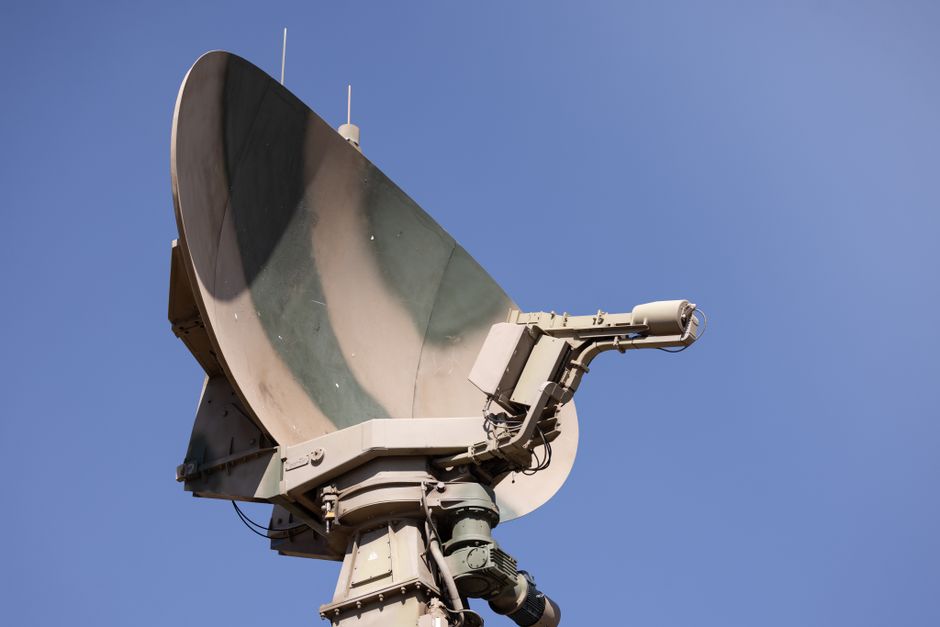
Split the quarter by segment and the whole company fits in one line. Per the earnings release as reported by Korean outlets (Digital Daily and HuffPost Korea carried the segment detail; Seoul Economic Daily’s English edition and Aju Press covered the headline): defense revenue of $492M (₩700.6bn), up 49%, with segment operating profit of $72.8M (₩103.7bn); ICT revenue of $131.5M (₩187.3bn), up 27%, earning $14.6M (₩20.8bn); and the “other” segment — which carries Philly Shipyard — with revenue of $161.3M (₩229.7bn) and an operating loss of $14.6M (₩20.8bn), a loss about a third narrower than a year ago.
Look at what those numbers do. Total operating profit: $72.8M. Defense segment operating profit: $72.8M. The same figure, because ICT’s entire contribution and the shipyard drag cancel each other out to the won. It’s a coincidence of rounding, but I can’t think of a cleaner X-ray of this business: two units earn, one unit burns, and the burn currently consumes exactly what the smaller earner makes. The defense segment ran a 14.8% operating margin (my arithmetic) on the back of export deliveries — gunner sights and fire control for Poland’s K2 tanks, Cheongung-II multi-function radars for the UAE and Saudi Arabia — plus domestic production for the Ulsan-class Batch-III frigates and the AESA radar and avionics on Korea’s KF-21 fighter. The company’s full-year 2025 operating margin was just 3.3% (Kiwoom data). This quarter made clear that the low annual number was never a defense problem; it was tuition being paid elsewhere.
The net income line runs colder: $37.0M (₩52.7bn), up only 14% while operating profit rose 219%. Something below the operating line — non-operating items, taxes, or a one-off sitting in last year’s base — moved hard the other way, and the summary coverage doesn’t specify what. I’ve put that gap on my list of things to pull from the half-year filing rather than guess at here. Reading the operating-profit headline and skipping the net line is exactly the mistake this kind of company — equity stakes and new ventures stapled to an operating core — punishes.
Order backlog stood at $7.93bn (₩11.3tn) at quarter-end, about 3.1 years of 2025 revenue (my arithmetic). I’ve learned to grade backlog harshly — I have watched Korean defense names triple their backlog while operating profit went backwards, because backlog is a revenue reservation, not a margin promise. What made this quarter matter is that the execution showed up, not the reservations.
Hanwha Systems Stock and Two Stale Sell-Side Marks
There are two named sell-side coordinates on this stock, and both predate the crash. On June 11, KB Securities’ Jung Dong-ik set a ₩120,000 ($84.27) valuation objective by applying a 3.89x multiple to forward book value, framing the company as the supplier of “radar, fire control and mission computers that account for 10–30% of system prices” across K-defense platforms, and as the purest beneficiary if the Philadelphia yard normalizes — that framing is my paraphrase of KB’s Korean-language note, not an English original. Ten days earlier, on June 1, Korea Investment & Securities lifted its objective by more than 120% to ₩150,000 ($105.34), as reported by the Korean wire News1.
Here is why I refuse to use either number as it stands. Both were written on the old ruler. Reverse KB’s stated 31% upside and the share price on their desk was about ₩91,600 — 47% above where the stock sits now (my arithmetic). Lay those June marks over today’s ₩62,500 and you get apparent upside of 92% and 140%, which is precisely the illusion stale research manufactures after a crash. I have not found a single named analyst update published after the July break — and that coverage vacuum is itself information about where this stock is right now. When the market’s scale changes and the research doesn’t, the gap between them isn’t opportunity; it’s just an unrefreshed page.
What would a refreshed mark even need? At minimum: a post-crash read on whether the Q2 export margin repeats, an explicit assumption about the shipyard’s loss trajectory against its 2026 deadline, and some judgment on what multiple a 45%-growth, 3%-annual-margin hybrid deserves after the market just repriced risk across the board. None of those inputs existed in June, which is exactly why I treat the June numbers as artifacts of a different market rather than as anchors. When the first post-crash note lands, the revision gap between it and these two marks will tell me more about the stock than either absolute number does.
A Philadelphia Shipyard on a Korean Balance Sheet
The biggest thing this company did in 2026 wasn’t earnings. It was moving money. On March 24 it announced the sale of a 4.54% stake in Hanwha Ocean — 13.92 million shares out of the 11.57% it held — to a special-purpose vehicle set up by four Korean brokerages, for about $1.19bn (₩1.7tn), leaving it with 7.03%, per Korean outlet CEO Score Daily. That works out to roughly ₩122,100 per share (my arithmetic), and at the same price the remaining stake is worth about $1.8bn (₩2.6tn) — 22% of Hanwha Systems’ entire $8.29bn (₩11.8tn) market cap. Strip it out and the market is pricing the operating business — the radars, the avionics, the IT arm, the shipyard bet — at roughly $6.5bn (my arithmetic).
Where is the $1.19bn going? The company named two destinations: defense and IT investment tied to Philly Shipyard’s role in MASGA — Washington’s “Make America Shipbuilding Great Again” push — and expansion of its space business. Hanwha Systems holds 60% of Philly Shipyard, the Philadelphia yard the group bought for $100 million in December 2024 and then backed with a $5 billion expansion plan in August 2025, per KED Global — two more docks, three quays, and a target of lifting capacity from roughly 1.5 vessels a year toward 20 over the medium-to-long term. The group’s own press release ties the investment to Korea’s $150bn shipbuilding pledge to the US. The yard’s order book has started to move: tankers and an LNG carrier at the investment announcement, and in July 2026 Seoul Economic Daily’s English edition reported a US missile-test-vessel order tied to the Golden Dome program. Trump-era procurement politics have even floated Hanwha as a partner on US Navy frigates, per KED Global.
Against all that momentum, one number: the segment that houses the yard still lost $14.6M last quarter. The company told analysts in early 2025 — per Korean outlet The Bell’s conference-call coverage — that it aimed for four ships a year and a turnaround to profit in 2026. That is not a direction; it’s a promise with a date on it, and two quarters remain. I’ve decided to grade the stock on the company’s own stated test rather than invent my own. And I’m keeping the politics in a separate mental account: MASGA orders ride on a US–Korea trade framework (the $5bn announcement was explicitly part of the tariff bargain, per KED Global), which means the yard’s pipeline moves on Washington’s clock as much as on commercial wins. I classify that as something I watch, not something I forecast.
The Moat I See in Hanwha Systems Stock — and Its Cracks
For US readers who know the K-defense story through the primes — Hanwha Aerospace‘s howitzers, Hyundai Rotem’s tanks, Korea Aerospace‘s fighters, the missile houses — it helps to place this company correctly on the map, because it is not one of them. Hanwha Systems doesn’t sell finished weapons. It sells the sensors and brains inside them: the AESA radar in the KF-21 fighter, the combat management system in the new frigates, the fire control in the K2 tank, the multi-function radar in the Cheongung-II air-defense battery that the UAE and Saudi Arabia bought. Per the KB analyst’s framing, that content runs 10–30% of a system’s price. When Korean platforms win export deals — whichever prime signs the contract — this company ships alongside. In a national defense-export cycle, it is the picks-and-shovels seat.
I’d name the moat specifically: switching costs. Once a radar, a mission computer or a combat-management suite is designed into a weapons platform, it stays for the platform’s service life and follows every export hull and airframe out the door. Nobody re-tenders the fighter’s radar mid-program. That is as durable as moats get in this industry — and it is narrower than it sounds, which is the crack. First, the position is derivative: Hanwha Systems has no export pipeline of its own; its revenue arrives only after the primes and shipbuilders sign, so the moat protects margins, not demand. Second — and this is the real bet in the stock, as I read it — the company is pumping the cash that moat generates into two unproven ventures, a Philadelphia shipyard and a space business. Money earned inside the moat is being spent outside it. If the reallocation works, the company changes weight class; if it doesn’t, a defense-electronics franchise’s margins will have financed tuition. Owning this stock is less a bet on the K-defense cycle than a bet on one management team’s capital allocation.
A few balance-sheet textures worth logging. The dividend record, per DART filings as aggregated by Kiwoom: ₩250 for 2022, ₩280, ₩350, then ₩500 for 2025 — three straight increases at a 39% payout ratio, though at a 0.8% yield this is no income stock; I note it only because the company kept raising shareholder returns while funding the shipyard. Foreign ownership sits at 10.16% — low for a KOSPI defense large-cap, which I read as this name having stayed outside the main battleground of foreign flows that chased the primes. That cuts both ways: less crowding, and less of the sponsorship that re-rates a stock quickly.
Hanwha Systems Stock Next to L3Harris
Now the uncomfortable ruler. Even 66% off its high, Hanwha Systems trades at a trailing P/E of 48.75, price-to-book of 2.42 and price-to-sales of 3.22 (Kiwoom data, July 31, 2026 close). The obvious US comparable for a defense-electronics house is L3Harris Technologies: $51.6bn market cap, trailing P/E of 27.99, forward P/E of 22.23, price-to-sales of 2.25, operating margin of 12.87% on $22.9bn of trailing revenue (stockanalysis.com, July 31 close). A mature peer more than six times the size runs nearly four times the margin at under six-tenths the trailing multiple (my arithmetic). I looked at putting Leonardo, Thales and Elbit in the same table and chose not to — I couldn’t verify their current multiples to a standard I’d publish, so they stay out.
The growth defense is real: Hanwha Systems grew revenue 45% last quarter and L3Harris never will, and the Middle East radar contracts, Polish deliveries and KF-21 production runway exist only on the Korean side of the table. So I don’t read the comparison as “expensive, therefore wrong.” I read it as: a large share of the growth story is already in the price. A 66% drawdown is a fact about where the stock was; it is not, by itself, a fact about value. On trailing numbers this is still a premium-priced defense stock — and its forward multiple is unknowable in public right now, because no post-crash estimate exists to divide by. Half the comparison table is blank, and that blank is part of my read.
Two Mechanics Behind the Numbers
Two mechanical notes sit under the figures above. Korean stocks move inside a ±30% daily price band, so a 13.4% up-day like July 31 sits well within normal plumbing, and there are no fractional shares on the KRX — at ₩62,500 a share the entry ticket is small, but position sizing happens in whole shares.
The currency layer deserves its own sentence, because in July it wasn’t background noise. Every dollar figure in this piece uses ₩1,424.0 per dollar — the Seoul daytime close on July 31 — so the equity drawdown and the won’s swings landed in the same month. I flag the rate because the arithmetic that follows a crash is usually done in local currency, and every converted figure here inherits that one number.
My Scorecard for Hanwha Systems Stock
I don’t own this, and I’m not moving before three things resolve. This time I’ve weighted them, because they are not equal.
Fifty points — the shipyard turns profitable on the year. The company set 2026 as the deadline itself. The Q3 checkpoint I’ll use is the “other” segment’s loss falling decisively below the ₩10bn-a-quarter neighborhood. If the date slips, the payback clock on the $1.19bn redeployment slips with it, and the 3%-margin annual profile stays. Thirty points — the defense engine holds. Whether 49% segment growth and a 14.8% margin were one shipment-heavy quarter or a structure is exactly what Q3 will say; I’ll also check that backlog holds near $7.9bn. Twenty points — the money trail. Concrete disclosures showing where the Hanwha Ocean proceeds actually land, in space and in Philadelphia. The Jeju space center was completed in December 2025; I can’t yet see space revenue in the P&L, and I want filings, not renderings.
Price is the last gate, not the first. If the July 29 intraday area around ₩50,700 ($35.60) reopens and the fifty-point item has already passed, I’ll start sizing a first look. And the kill-switch, written down in advance: if the defense margin sags back to mid-single digits while the shipyard loss widens again, this name leaves my watchlist — when growth priced into a stock stops showing up, what’s left is only the multiple, and July already demonstrated what the market does to unsupported multiples.
I’ll also write down the way I could be wrong that costs me, because it isn’t the drawdown deepening — I don’t own it. It’s the scenario where the shipyard turns in Q3, defense holds its margin, a fresh sell-side estimate lands, and the stock re-rates hard before my fifty-point item is formally gradable. Waiting for confirmation always risks paying a higher price for a safer fact, and I accept that trade explicitly: with a trailing multiple still at 48.75 and a promise-with-a-deadline still unmet, I’d rather buy the confirmation expensive than the hope cheap. That preference is a temperament choice as much as an analytical one, and I’m writing it down so I can’t retrofit a different story later.
Next reading: the Q3 report. I’ll bring this exact scorecard back out and mark it in public.
Price and fundamental data: Kiwoom Securities feed, July 31, 2026 close. Figures marked “my arithmetic” are computed from the cited source data. All dollar conversions use ₩1,424.0 per USD — the Seoul FX market daytime closing rate for July 31, 2026, cross-checked across two Korean outlets (Newspim, Money Today). Q2 segment figures are from the company’s earnings release as carried by Korean media (Digital Daily, HuffPost Korea); Korean-language sources are cited as reported, and quotations from them are my paraphrase from the Korean, not English originals. L3Harris data from stockanalysis.com as of the July 31 close.