Hanwha Ocean Stock After the Canada Submarine Loss
It took one press release to erase a $40 billion dream. On July 7, Canada named Germany’s ThyssenKrupp Marine Systems — not Korea’s Hanwha Ocean — as preferred bidder for its next-generation submarine program, and Hanwha Ocean stock fell roughly 22% in a single session on the Korea Exchange, sliding to the ₩90,000 (about $59) area. A week later it printed an intraday low of ₩74,000 ($48.70), nearly half its 250-day peak. I don’t own the shares. And days like these are exactly when I reach for a calculator instead of a hot take: what actually left the price, and what’s still in it?
The 30-second version — What left: a submarine contract worth up to C$60 billion (about ₩60 trillion, or close to $40 billion at current exchange rates). What remains: sell-side estimates pointing to a possibly record second quarter, a second-half bid pipeline across Thailand, Estonia and a West African FPSO, and a new American option the market hasn’t priced yet.
My call for my own account: I stay on the sidelines — but with a weighted scorecard (earnings 40, orders 40, US shipbuilding policy 20) rather than a vague wait. The full scale is at the bottom.
Contents
The Day Hanwha Ocean Stock Gave Back 22%
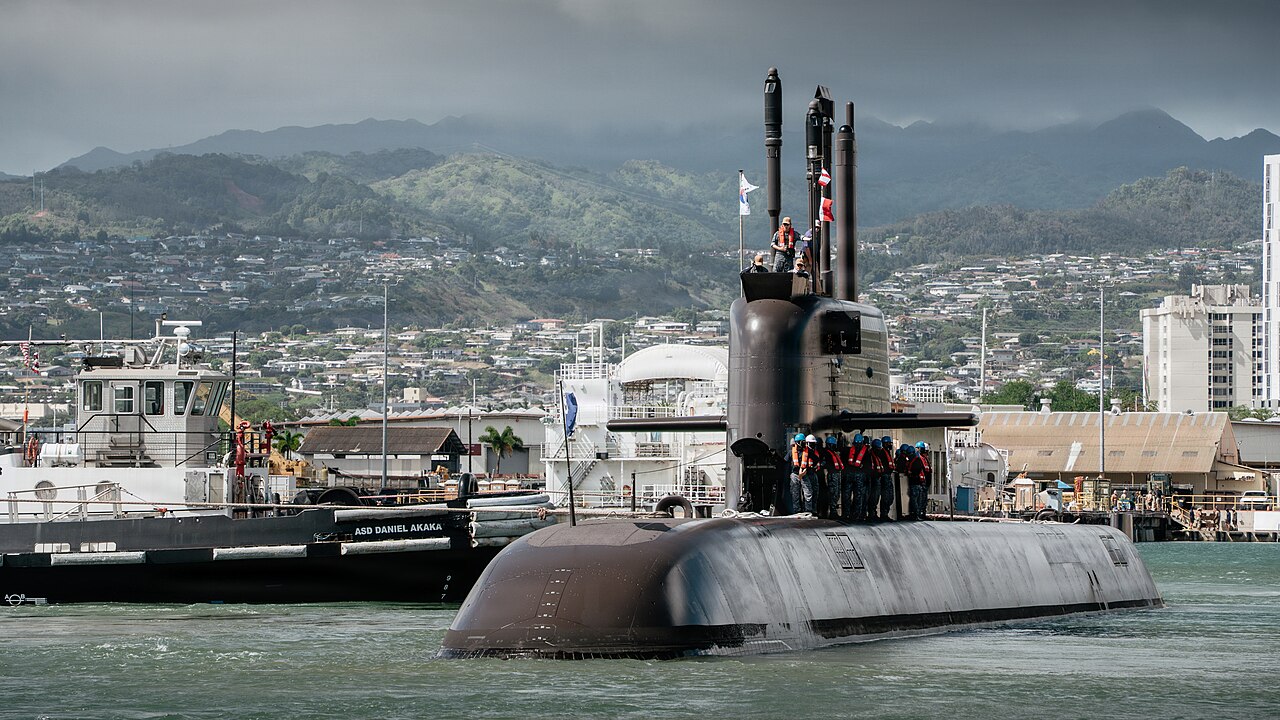
Start with the facts of the defeat. Canada’s Patrol Submarine Project (CPSP) covers up to 12 boats with a total budget of as much as C$60 billion, and per Korean business daily E-Today, Ottawa chose TKMS’s Type 212CD design over Hanwha Ocean’s KSS-III Batch-II. Hanwha Ocean retains only the right to step in as runner-up if talks with the Germans collapse. The company itself, quoted by the Seoul Shinmun, admitted it “could not overcome the NATO alliance barrier.”
The selling spread across the whole Hanwha defense complex that day — Seoul Shinmun’s tally had Hanwha Systems down 16%, Hanwha Engine down 11%, Hanwha Aerospace down 8%, and even rival HD Hyundai Heavy Industries off 7%. Shinhan Securities analysts Lee Dong-heon and Lee Ji-han, cited in the E-Today piece, distilled it into one line I keep coming back to: what decided the contest “was not specifications but geopolitics” — a political choice for NATO cohesion at a moment of Russian threat and European rearmament.
That sentence, to me, is the heart of this drawdown. Hanwha Ocean didn’t lose a technology evaluation; it lost a map of alliances. Why that distinction matters is the moat question, and I’ll come back to it.
One housekeeping item first: the runner-up right. If Canada’s negotiations with TKMS break down, Hanwha Ocean gets another turn at the table. I value that residual option at zero in my own math. A runner-up right is a bet on somebody else’s failure, and the moment I start putting other people’s failed negotiations on my scorecard, I’m managing hope rather than a thesis. If the turn ever comes, I’ll add it back then.
A C$60 Billion Option, Priced In and Priced Out
For readers new to the name: Hanwha Ocean, the former Daewoo Shipbuilding & Marine Engineering, trades on the KOSPI — the main board of the Korea Exchange, Korea’s equivalent of the NYSE — under ticker 042660, with a market value around ₩26.6 trillion, or about $17.5 billion converted at the recent won rate of roughly ₩1,520 per dollar (Trading Economics). All dollar figures below use that rate.
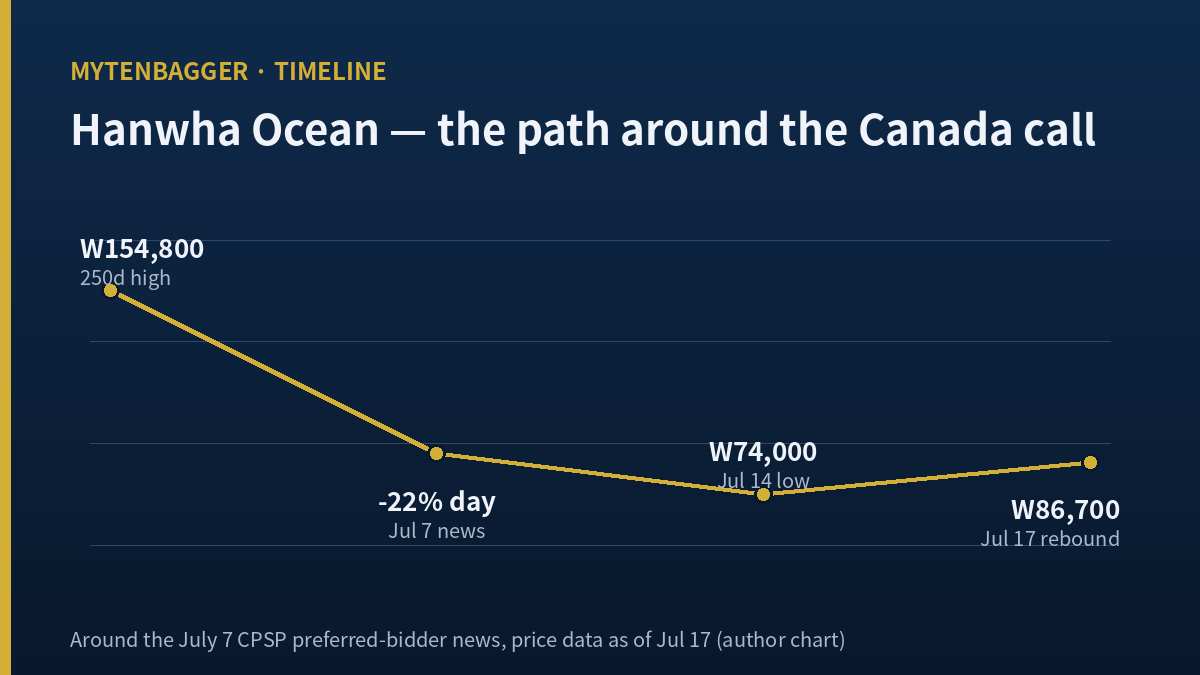
Here is the price path from my own market-data records. The 250-day high sits at ₩154,800 ($102). Through mid-June the stock hovered in the ₩120,000–130,000 range as money positioned ahead of the Canadian decision — including a run from ₩103,000 to ₩132,600, a 29% surge in under two weeks (June 9 to June 17, my price database). The last close before the announcement, on July 6, was ₩115,400 ($75.90). July 7 closed at ₩89,800 ($59.10), down 22.2%. The bleeding continued to that ₩74,000 intraday low on July 14 — 52% below the peak, 36% below the pre-announcement close.
Then the tape turned. From the July 14 low the stock clawed back to ₩86,700 ($57) in three sessions, including a 5%-plus rally on July 16 against a sharply falling Seoul market. The Korean outlet CBCNews — a Seoul-based publication, no relation to Canada’s CBC — tied that move to remarks from President Trump suggesting the US could procure warships built outside America. An option on Canada expired worthless; the market immediately started pricing an option on Washington.
Shinhan’s post-mortem argued the crash was simply the unwind of pre-positioned hopes, since CPSP value “was never in the base valuation — it was an option.” I half agree. If it was just an option, something still powered that 29% June melt-up. Markets price options too, and what you see at ₩86,700 is the price with that option stripped out.
Hanwha Ocean Stock vs. the Earnings: Record Q2 Estimates
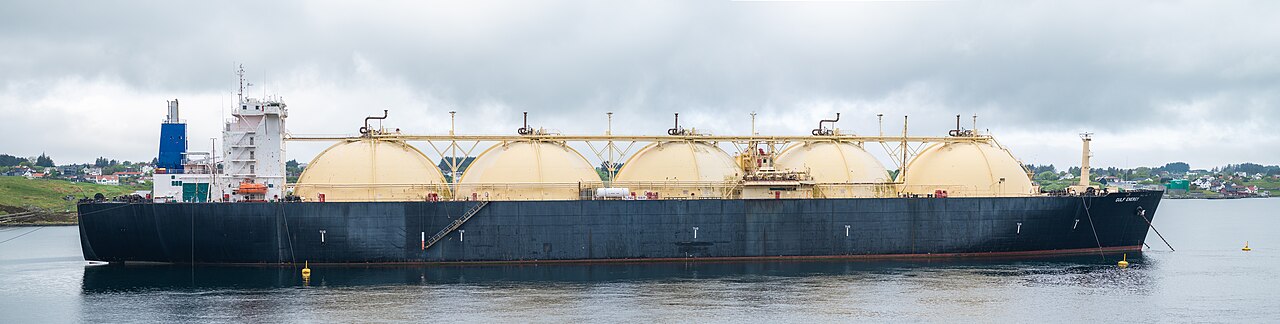
While the price collapsed, the earnings estimates moved the other way. The 2025 base, from my data: revenue of ₩12.78 trillion (about $8.4 billion), operating profit of ₩1.17 trillion ($770 million) for a 9.1% operating margin, and return on equity of 22.6%. For this year, E-Today’s survey of sell-side desks puts second-quarter operating profit at ₩510–590 billion ($336–388 million) and the full year at roughly ₩2 trillion ($1.3 billion) — up more than 70% from 2025 — on a richer mix of high-priced LNG carriers, productivity gains and a friendly exchange rate.
The estimates diverge in an instructive way. Hwang Hyun-jung of Korea Investment & Securities, in a report summarized by Korean wire Newspim, models Q2 revenue of ₩4.82 trillion ($3.17 billion) and operating profit of ₩596.1 billion ($392 million) — an all-time quarterly high — but a big chunk of that comes from a revenue-recognition timing change on the P-79 floating production unit, releasing about ₩1.5 trillion (roughly $1 billion) of accumulated inventory into the quarter. Samsung Securities’ Han Young-soo, per the Asia Business Daily, sits more conservatively at ₩4.0 trillion revenue and ₩542 billion ($357 million) operating profit. When two credible desks are ₩800 billion apart on one quarter’s revenue, the gap itself is telling you where the accounting lever is.
So my focal point for the late-July release is not the headline. It’s the underlying commercial-ship margin with the P-79 effect stripped out. A “record quarter” can be manufactured by recognition timing; the quality of the cycle shows up in the base margin. And for the order book, one quiet data point that predates the drama: on June 12 the company disclosed a four-ship VLCC order worth ₩800.1 billion, about $526 million (disclosure carried by Nate News). The commercial pantry kept filling while everyone watched Ottawa.
Hanwha Ocean Stock and the New Sell-Side Price Objectives
Korean brokerages marked their price objectives down almost in unison. E-Today’s tally: the ten-firm average now sits at ₩132,900 (about $87), down about 20% from the ₩167,000–179,000 range that prevailed before Canada. The spread runs from DB Securities at ₩110,000 ($72) on the low end, through NH at ₩126,000, Samsung, Sangsangin and KB at ₩130,000, Korea Investment at ₩134,000, Daishin at ₩139,000, to Kiwoom at ₩144,000 ($95) on the high end.
Two things jump out at me. First, the interval: even the floor of that range sits 27% above the ₩86,700 print, and the ceiling 66% above (my arithmetic). Daishin went as far as calling the sell-off overdone — an opportunity, in their words. Second, the humility check: those same desks carried ₩170,000-area objectives with equal conviction three weeks ago. I use the sell-side spread as a map of where the debate is, never as an entry trigger.
One more piece of arithmetic I did on my own. At ₩26.6 trillion of market value — I re-derived it as ₩86,700 times 306.4 million shares, and it checks — the stock trades at 22.8 times 2025 operating profit. If the ₩2 trillion estimate for 2026 lands, that same multiple compresses to about 13 times (simple division, my calculation). Half the valuation argument hangs on one assumption: that the estimate is real.
Flows: Who Sold Hanwha Ocean Stock, and Who Might Buy It
The tape tells a flow story too. Volume on July 7 hit 5.5 million shares against a prior-month daily average of roughly 1.5–2 million (my price database) — call it three times normal — with another 3.1 and 3.8 million shares the following two sessions. The double bottom at ₩77,700 intraday on July 9 and ₩74,000 on July 14 reads, to me, like the footprint of leveraged event money finishing its exit.
The structural number that caught my eye is foreign ownership: about 9.3% of Hanwha Ocean, versus 33.5% for compatriot HD Korea Shipbuilding & Offshore Engineering — roughly a quarter of the level, from my data. Korea’s defense rally has been overwhelmingly a domestic-money affair here, and the foreign shelf was nearly empty. That cuts both ways. It’s part of why the drawdown found no long-horizon foreign bid to cushion it — and it also means that if the American angle ever hardens into contracts, the marginal buyer is still outside the country. I track the foreign-ownership ratio as a supporting indicator on my scale: a climb into double digits would tell me the buyer mix is changing.
The Moat Question: Technology Passed, Alliances Blocked
Let me name the moat precisely, because “they have a moat” is lazy. First, a genuine technology-and-track-record moat: only a handful of yards on earth can design and build 3,000-ton-class ocean-going submarines to export specification, and carrying the KSS-III Batch-II to the final two of a C$60 billion competition is itself the proof. Even the analysts cutting their numbers concede the point — Korea Investment’s Hwang wrote that the campaign “proved the bid competitiveness” of Hanwha’s submarine program. Add the commercial layer: high-end LNG carrier construction, where Korean yards still command the price premium that is driving this year’s margin expansion.
Second — and this is what July 7 actually revealed — there is no market-access moat. When NATO cohesion and European supply-chain integration become the selection criteria, a non-European yard starts every race a lap behind, regardless of specs. Canada proved it. Poland’s roughly ₩8 trillion ($5.3 billion) Orka submarine program, where Korean wire News1 reports Saab has re-entered the picture as a disruptive variable, may replay the same pattern. My working assumption is that European and NATO-anchored tenders carry a structurally low base rate for Korean bidders, and I refuse to anchor a thesis on beating that base rate.
But there is a second door, and it swings the other way: America. As ZDNet Korea framed it, the rebound key is MASGA — the “Make American Shipyards Great Again” push for US naval maintenance and shipbuilding cooperation — and Hanwha already owns a physical foothold, the Philly Shipyard in Philadelphia, acquired in 2024. The US Navy’s own industrial base is the reason this door exists: American yards are backlogged for years, which is why a president can float buying hulls built abroad. So the asymmetry that defines this stock: a real technology moat, market access blocked in Europe, market access potentially opening in America. The market has re-priced the first two. It has not seriously priced the third — July 16’s pop was a rumor of pricing, not the thing itself.
Why does the American door even exist? Because the US naval-industrial base is the mirror image of Korea’s problem. Huntington Ingalls and General Dynamics’ Electric Boat have demand visibility Korean yards can only envy — but their submarine and destroyer programs run years behind schedule, and there is no spare commercial capacity behind them. Korea has the opposite: world-class throughput and empty space on the geopolitical map. The Philly Shipyard purchase gives Hanwha a US-flag, US-soil venue — it already builds Jones Act commercial vessels, the ships legally required to be US-built for domestic routes — which is precisely the kind of asset that turns a Korean yard from a foreign vendor into a domestic industrial partner. That is the bull case I take seriously. My discipline is only about sequencing: I want the partnership on paper, not in a press conference, before it earns points on my scale.
Why I’m Not Buying Hanwha Ocean Stock Here
After a 44% drawdown from the peak, the contrarian buy writes itself. Here is the other side of my ledger, in order of weight.
Valuation first. Hanwha Ocean trades at 4.31 times book value; HD Korea Shipbuilding & Offshore, the sector’s flagship holding company, trades at 1.88 times (both from my data, July 17). Even after losing half its price, this is still more than twice as expensive as the domestic comparable on assets. Against global naval builders the gap is starker: Huntington Ingalls — America’s pure-play warship yard — has traded around a mid-teens earnings multiple over the past decade (fullratio’s historical series puts the ten-year mean near 15), while Hanwha Ocean’s trailing multiple sits at 21.3 even post-crash. Korean shipbuilders earn a growth premium over US yards locked into domestic order books, but the premium only survives if the growth does.
Second, there is no dividend. Zero paid for 2025. Every month of waiting is carried entirely by the capital-gains case, so every slipped tender has a real cost of time. Third, the fixed-cost overhang: Korea Investment’s Hwang flags that until KDDX destroyer work begins around 2028, the specialized naval yard at Geoje runs as a fixed-cost drag on margins. With the warship premium deflated, that yard is a cost line for the next two years, not a story line. Fourth, the record Q2 may be significantly a P-79 recognition artifact, as covered above — I won’t take the headline at face value until the base margin is disclosed or derivable. Fifth, leverage: a 204% debt-to-equity ratio. Shipbuilding balance sheets always look levered because customer advances sit as liabilities, but in a jumpy rate-and-currency environment I don’t call this a light structure. Sixth, the group beta — as July 7 showed, this name moves with the entire Hanwha defense complex, so owning it adds less diversification than it appears if you already hold Korean defense exposure, as I do.
Cheap-looking (a crash) and cheap (a valuation) are different questions, and right now this stock answers them differently.
How Americans Can Trade It — and Why I’d Still Wait
Access notes, because they shape position sizing. Hanwha Ocean has no US listing and no ADR — not even a meaningful OTC pink-sheet line that I could verify; the primary quote is Seoul (KRX:042660). If I ever act on my scale below, I’d do it in two or three tranches through direct KRX access, sized so that a repeat of July 7 — which this stock has now demonstrated it can produce — costs me sleep, not solvency.
My Weighted Watch Scale for Hanwha Ocean Stock
So I end where I always try to end: conditions written down before the events, not after. One hundred points, three buckets; at sixty, I start building a position in tranches. Until then I hold nothing.
Earnings, 40 points. The late-July Q2 release. Twenty points if operating profit lands in or above the ₩510–590 billion consensus band; twenty more if the commercial-ship base margin, with the P-79 recognition stripped out, improves on Q1. If the company doesn’t disclose enough to separate the P-79 effect, I score the second half at zero — conservatism is the tiebreaker. Below the band, the earnings bucket scores zero and, frankly, strengthens the case for staying out, because the post-crash rebound would be resting on nothing.
My release-day playbook, written before the print: above the top of the band with a confirmed base-margin improvement, I award the full forty and shift my attention to the tender calendar. Inside the band, twenty points and the decision rolls to Q3 — no heroics on an in-line quarter. Below ₩510 billion, zero points, and I expect the market to retest the post-crash lows, because the one leg the rebound stands on — the earnings engine — would have wobbled on schedule. Deciding how I’ll react before I see the number is the cheapest insurance I know; it has kept me out of more event-day traps than any indicator.
Orders, 40 points. The second-half pipeline E-Today lays out: the Thai frigate, Estonia’s offshore patrol vessels, the West African FPSO. Two or more wins scores the full forty; one win scores twenty. A reopened Poland Orka bid would be upside to the scale — but after Canada, I assign NATO-adjacent tenders a low prior by default.
MASGA, 20 points. I count documents, not speeches. A US Navy MRO award or hull contract moving past the request-for-information stage to a signed order scores twenty. Presidential remarks score zero — that’s my seatbelt against buying rallies like July 16’s.
And the kill switch, written just as plainly: if the Q2 base margin deteriorates versus Q1 and the second-half tenders go zero-for-three by the end of Q3, I fold the scorecard and drop the name from my watch entirely. A watch without conditions isn’t discipline; it’s drift.
The C$60 billion lottery ticket has been torn up, and its price has left the stock. What remains is an earnings engine that sell-side desks see reaching ₩2 trillion and a pipeline that runs through Bangkok, Tallinn, West Africa, Warsaw and — maybe — Philadelphia. I’m not the investor who buys the moment a lottery ticket gets repriced; I’m the one who pays up once the pipeline turns into contract numbers. If that costs me a worse entry, I’ll pay it as the price of confirmation. Tonight I log three weighted lines in my watch file and close the calculator.
Related reading
- ISU Petasys Stock: The Real Gate Is Capital Discipline
- Dongwon Industries Stock: Capex Follows the Cash It Earns
- Hankuk Carbon Stock Carries the Inventory GTT Never Buys