Sungeel Hitech Stock Sells Refined Metal It Never Mined
| What I measured | What it came to |
|---|---|
| Sungeel Hitech stock revenue index, 2022 fiscal year = 100 | 91.65 (2023) · 50.47 (2024) · 72.11 (2025) · 102.04 (2026 half-year run rate), all by my calculation |
| Best quarter this company has ever booked | KRW 81.54bn in the first quarter of 2023. The April to June 2026 quarter reached 94.20% of it (my calculation) |
| Lithium price over roughly one year | USD 8 per kg to USD 22 per kg, peaking at USD 24.1 in May 2026 and easing to USD 21.6 |
| Cobalt price, September 2025 to June 2026 | USD 33,406 to USD 55,854 per tonne |
| Market value against my own revenue total | 2.029 using trailing four discrete quarters of KRW 234.95bn (my calculation), against 2.45 on the vendor screen |
| Where I stand | No position, no order, watching. The size filter comes first and the metal question comes second |
Contents
Sungeel Hitech stock earns on a price it does not set
Sungeel Hitech (KOSDAQ: 365340) takes spent lithium-ion cells and manufacturing scrap and pulls cobalt, nickel, manganese and lithium back out of them. It operates no mine of its own. Its selling price is nonetheless the metal price, because a refined sulfate is a refined sulfate whether the metal in it came out of the ground or out of a used battery pack.
That single fact is why I opened the revenue line before I opened anything else. If the selling price is set somewhere the company has no say over, then revenue growth tells me about the commodity market first and about the plant second. I wanted to know which one I was looking at.
KOSDAQ is the smaller of Korea’s two main boards, roughly analogous to the Nasdaq in the sense that it carries younger and more technology-weighted issues. The KOSPI is the senior board. Sungeel Hitech has traded there since July 2022, which is where my daily price series for the name begins.
Four fiscal years, rebased so the round trip is visible
| Fiscal year | Revenue (KRW bn) | Index, 2022 = 100 |
|---|---|---|
| 2022 | 269.90 | 100.00 |
| 2023 | 247.37 | 91.65 |
| 2024 | 136.22 | 50.47 |
| 2025 | 194.63 | 72.11 |
| 2026, half-year doubled | 275.40 | 102.04 |
Source: consolidated statements filed with Korea’s Financial Supervisory Service (2025 annual report, receipt number 20260602000219; 2026 half-year report, receipt number 20260814000512). The index and the doubled half-year figure are my calculations. Margins and the balance sheet live in the Korean-language edition of this note; this table is deliberately one line only. Doubling six months is a run rate, never a forecast. The second half has come in below the first in each of the last three years at this company: KRW 102.31bn against 145.06bn in 2023, KRW 66.06bn against 70.15bn in 2024, and KRW 97.25bn against 97.38bn in 2025, all by my calculation from the same filings.
The company lost roughly half its revenue in two years and has now, on a run rate, put all of it back. Over exactly that stretch its physical capacity only moved in one direction.
Capacity never fell, so it cannot be what moved Sungeel Hitech stock revenue
IBK Investment and Securities put the group’s global capacity at 95,000 tonnes, equivalent to 25 GWh of pack material, in a March 30, 2026 note reported by Edaily Marketin. The same note has the third plant, the Hydro Center, running at 70 to 80 percent in the closing quarter of 2025 and heading toward roughly 100 percent by the third quarter of 2026. Korean outlet Daily Invest reports the same utilization path with the first half of 2026 at 75 to 80 percent.
I have not verified those utilization figures against a filing. They come to me through Korean secondary coverage of a sell-side note I could not open, and I am recording them at that weight. What I can verify is the direction of capital spending: KRW 189.69bn in 2023 and KRW 173.40bn in 2024, then KRW 36.18bn in 2025 and KRW 9.87bn in the first half of 2026, all from the filings above. Plants were coming online through that whole stretch.
The prices that did move
Korean trade outlet Digital Today published a survey of recycler economics that gives the three inputs that matter to a company like this one:
- Lithium went from USD 8 per kg to USD 22 per kg inside roughly a year, touched USD 24.1 in May 2026, and settled back to USD 21.6, an 11 percent give-back from the peak. The article puts the sequential quarterly gain at 19.9 percent.
- Nickel moved from USD 15,275 per tonne in February 2025 to USD 17,664 per tonne in June 2026, a 5.0 percent sequential gain.
- Cobalt ran from USD 33,406 per tonne in September 2025 to USD 55,854 per tonne in June 2026, the largest of the three moves. By my calculation that is a gain of 67.20 percent.
Set that alongside the index. Revenue bottomed in the 2024 fiscal year, and I want to be careful here: the price series above does not reach back into 2024, so I cannot show from it that metals bottomed in the same year. What I can show is that all three quoted prices are rising across 2025 and the first half of 2026, which is exactly the stretch over which revenue recovered. I am not claiming a coefficient. I am claiming that the revenue line and the price line trace the same path over these four years, while the capacity line traces a different one, because it only went up.
Sungeel Hitech stock has still not matched its best quarter
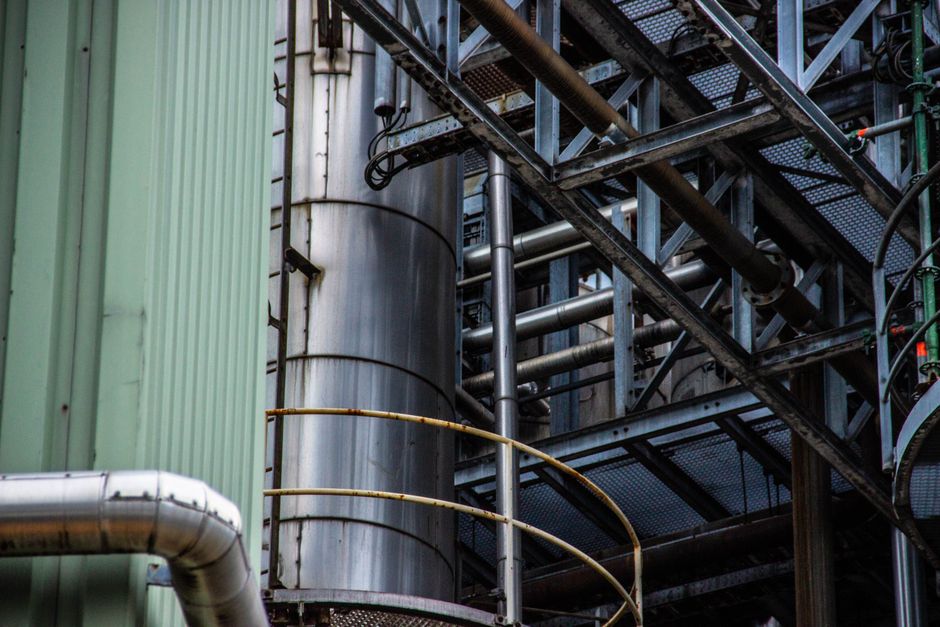
The strongest three months this company has ever reported are January to March 2023, at KRW 81.54bn of revenue. The April to June 2026 quarter came to KRW 76.81bn, which is 94.20 percent of that record by my calculation. Thirteen quarters, a finished third plant and a metal-price recovery have brought quarterly revenue back to just under where it already was.
I find this the most useful single sentence in the whole file, because it separates two things people tend to fuse. The operating line genuinely turned; the top line has not yet made a new high. A recovery to a prior peak and a breakout past it call for different holding periods. I am not willing to pay for the second while only the first sits on the page.
What I had wrong before I drew the index
Capacity was where I started, and I started there because it is the number a recycler’s own materials lead with. Tonnes installed, gigawatt-hours served, plants commissioned. I had been treating that figure as a proxy for the revenue this company could produce, the way I would for a fabricator whose price gets negotiated with a customer. That reading survives only while the selling price is stable. Here the selling price is a globally quoted commodity, so installed tonnes set a ceiling on volume and say almost nothing about the value of the output. The index above is what made me stop using capacity as a forecast and start using it as a ceiling on volume.
The purchase side moved too, and Korean law moved with it
A recycler earns a spread, so the selling price is only half of what I should be watching. The other half is what it pays for feedstock, and black mass is itself priced off the same three metals. When lithium runs from USD 8 to USD 22 per kg, the scrap that contains lithium reprices as well, and the operator captures only the difference between the two repricings, never the full move in the metal. I have not found a public series for Korean black mass purchase prices, so I cannot put a number on how much of the metal move this company actually kept. That gap is the largest single reason I hold the reading loosely.
What I can date precisely is the supply side of that purchase. From the start of 2026 Korea’s Ministry of Climate, Energy and Environment reclassified lithium-based spent secondary batteries from smartphones and power banks, along with drive-type cells from personal mobility devices, as circular resources instead of waste, according to a February 2, 2026 government policy briefing. The briefing carries no volume targets, so I am not going to translate a legal reclassification into tonnes.
It matters anyway, because scrap sourcing is the worry the bullish sell-side note names, and I arrived at the same place from the price side. Yujin Investment and Securities discounted its own valuation by 15 percent for exactly that, and a rule change that widens the legal channel for consumer-grade cells is the kind of thing that shows up in a purchase ledger long before it shows up in a headline. I will look for it in the third-quarter cost of goods line. Another briefing will not settle it.
Where Sungeel Hitech stock sits against the listed recyclers
I could find very few listed pure plays in this business. Below are the ones I was able to price on a single reading day. The last column carries a status instead of a multiple, on purpose.
| Company | Market value | Revenue | Value ÷ revenue | Still listed? |
|---|---|---|---|---|
| Sungeel Hitech (KOSDAQ 365340) | KRW 476.80bn | KRW 234.95bn | 2.029 | Yes |
| American Battery Technology (ABAT) | USD 373.78M | USD 16.28M | 22.96 | Yes |
| Aqua Metals (AQMS) | USD 9.73M | Not reported on the page | Cannot be formed | Yes |
| Umicore (Euronext Brussels UMI) | EUR 5.71bn | EUR 24.61bn | 0.232 | Yes, and diversified |
| Li-Cycle | USD 40M asset bid (no market value applies) | Not applicable | Not applicable | No, taken over out of bankruptcy on August 8, 2025 |
Sources: Sungeel Hitech from the September 3, 2026 close and my own sum of the four most recent discrete quarters in the filings. ABAT and Aqua Metals from their stockanalysis.com company pages, Umicore from its Brussels-line page on the same site. Li-Cycle from Waste Dive. Ratios are my calculations. Currencies are left unconverted on purpose; the only conversion anywhere in this piece is the one in the footnote.
Five places this table is loose, and one row that is not a peer at all
- Umicore is a diversified materials group with catalysis and specialty divisions, so its 0.232 is not a recycling multiple. I keep it in as a scale reference for what a profitable incumbent looks like on the same axis, and readers should discount it accordingly.
- The Umicore reading came from the Brussels line as of August 28, 2026, five trading sessions before my Korean close. The US over-the-counter page for the same company was carrying a June 25, 2026 price, so I did not use it.
- Aqua Metals shows no revenue figure on the page I read, so the ratio cannot be formed at all. I would sooner report the gap than source a number elsewhere and pretend it belongs on the same reading day.
- My own 2.029 uses a revenue total I summed myself. The vendor screen shows 2.45 because it uses a different trailing window. Both are defensible. They are two different measurements, so I would not put them in one column.
- Three currencies sit in one table. A reader who mentally converts them will get a different ranking than one who does not, because exchange rates over the past two years have moved more than some of these ratios.
The Li-Cycle row is the reason I built the last column. Waste Dive reported that Glencore completed its takeover of Li-Cycle’s assets on August 8, 2025, on a bid of approximately USD 40 million submitted on May 14, 2025. Li-Cycle carried USD 861.2 million of assets and USD 598.1 million of liabilities at the end of 2024, and its headcount went from a peak of 536 in September 2023 to roughly 25 at closing. What had been, by the coverage I could find, the most widely followed listed pure play in this business stopped being one, and it did so while the metal prices in the section above were still well below where they sit now.
What I can and cannot see from outside Korea
There is no depositary receipt for this company. A US-based reader who wants exposure has to reach the Korean market directly through a broker that carries KOSDAQ, and I did not check whether any broadly held Korea fund holds the name. What I can measure is how much of this trades on a given day. The September 3, 2026 session moved 36,000 shares, which at that day’s close is KRW 1.33bn, or roughly USD 0.98 million of turnover. Across the twenty sessions ending that day the daily average comes to 54,108 shares and about USD 1.43 million, all by my calculation from the daily bars. For a US-based reader that is the number worth writing down: the binding limit on a position here is depth, and the law has nothing to do with it.
Two of the Korean names I have covered sit close enough to this one to be worth setting beside it. Chunbo grew first-half revenue by a third and still ran an operating loss, which is the mirror image of what happened here: there the volume arrived and the price did not hold, and here the price arrived and the volume has not yet made a new high. POSCO Holdings gives the other side of the same commodity, since its Argentine lithium unit turned its first monthly operating profit while the share price fell 42 percent. One company sells lithium it extracts and one sells lithium it recovers, and in 2026 both of them were being carried by the same quoted price.
The other side of the Sungeel Hitech stock case
Twelve items, split by who is doing the talking. The first group is what the company and its own filings put on the record. The second is what people outside the company say.
Seven from the company and its filings
- The April to June 2026 quarter produced KRW 6.33bn of operating profit, the first positive quarter after eleven negative ones. Direction runs the company’s way here.
- Capital spending has collapsed from KRW 189.69bn in 2023 to KRW 9.87bn in the first six months of 2026. If the spending phase is genuinely over, the cash question changes character.
- Operating cash flow for the first half of 2026 was positive at KRW 5.32bn. In the half-year data I hold, which starts in 2023, the only other positive first half is 2023’s KRW 1.12bn.
- Free cash flow for the same half was still negative at KRW 4.55bn, because capital spending of KRW 9.87bn exceeded that operating inflow.
- Total liabilities went from KRW 129.32bn at the end of 2022 to KRW 572.97bn at the end of June 2026, a rise of 4.43 times by my calculation. Over the same span total assets grew KRW 338.37bn while liabilities grew KRW 443.65bn, so the increase in what is owed exceeded the increase in what is owned by KRW 105.29bn.
- Equity moved the other way over the same span, from KRW 291.23bn to KRW 185.94bn, down 36.15 percent by my calculation. A revenue round trip does not put that back.
- Total equity rose KRW 53.27bn during the June quarter while discrete net income was only KRW 9.30bn. I could not identify where the remaining KRW 43.97bn came from, and I record that gap instead of guessing at it.
Five from outside the company
- The Digital Today survey flags CATL’s new lithium mine, scheduled to start in the second half of 2026, as a variable that could press prices back down and delay margin repair across the sector. That is a direct threat to the mechanism this whole piece rests on.
- Lithium has already given back 11 percent from its May 2026 peak. The metal that carried the recovery has stopped rising.
- IBK Investment and Securities moved from a neutral stance to trading buy on March 30, 2026 and lifted its valuation to KRW 60,000 from KRW 32,000, on 2026 revenue of KRW 277.9bn. That reads the same company far more warmly than I do.
- A Yujin Investment and Securities note dated March 17, 2026, as relayed by Daily Invest, carries KRW 73,000 and 2026 operating profit of KRW 3.8bn, while applying a 15 percent discount for concerns about scrap sourcing and sustained utilization. Even the bullish case names the same worry I have.
- Li-Cycle’s fate cuts both ways. It removes a competitor from the field. It also shows what happens to a listed recycler that runs out of runway before the price cycle turns.
My reference points on Sungeel Hitech stock
No position, no order, watching. Two conditions that would show me I am wrong, both settled by statutory filings only.
Condition 102, settled by the 2026 third-quarter report
If July to September 2026 revenue comes in above KRW 81.54bn, this company will have set a new quarterly record and my sentence about not having matched the 2023 peak stops being true. That threshold is 6.15 percent above the June quarter by my calculation. The statutory deadline for that report falls on November 16, 2026, because the date the financial database carries, November 15, is a Sunday. If it fires, I stop treating the recovery as a round trip and go looking at the customer list, because a new record on softer lithium would mean volume, and volume means contracts I have not read.
Condition 103, settled by the 2026 annual report in March 2027
This condition went through a rewrite, and the rewrite is worth showing. My first draft said the reading fails if full-year 2026 revenue lands below KRW 247.37bn, the 2023 level, which needs a second half under KRW 109.67bn. Then I counted the second halves: KRW 102.31bn, KRW 66.06bn and KRW 97.25bn over the last three years. Every one of them is under that threshold, so the condition would have fired on a simple repeat of history and told me nothing. What it should test is the seasonality itself. So: if 2026 second-half revenue exceeds KRW 120bn, my reading that the run rate is too kind falls over. That is 17.29 percent above the best second half this company has recorded, by my calculation, and it would put the full year at roughly KRW 257.70bn. If it fires, I throw out the index and rebuild the read on discrete quarters, since annual figures will have proved too coarse to carry the argument.
What I write down if neither one fires
I have never set out in advance what silence means, and both of these can expire without a word. So here is the rule I am adopting. If March 2027 arrives with neither condition triggered, I will not record that as confirmation. Conditions that fail to fire and judgments that turn out correct are separate things, and collapsing them is how a watchlist entry quietly becomes a conviction. I will instead file it under one of three headings: the data arrived and the threshold held; the data arrived and my threshold was set somewhere it could never have been reached; or the data never arrived in usable form. The middle heading is a failure of my own condition design, and it is the one I would otherwise be most tempted to read as a win.
Prices and multiples reflect the September 3, 2026 Korean close, checked before the September 4 open. The Korean won is the reference currency throughout and there is exactly one conversion in this piece: at roughly KRW 1,359.3 per dollar on that same date, the KRW 476.80bn market value is approximately USD 350.77 million. Metal prices, peer readings and utilization figures each carry their own dates in the text. Anything marked as my calculation is a figure I derived; it does not appear in the source as printed.