
Hanwha Aerospace Stock Fell 42%: Why I’m Watching, Not Buying
I respect Hanwha Aerospace stock as the flagship of Korea’s Europe-rearmament trade. I still own zero shares and only watch. The order backlog is close to $29B (₩40T), yet last year’s operating cash flow was negative and the trailing P/E is about 34x. For me the real checkpoint is not the size of the backlog but the speed at which it becomes cash — the second-half Poland deliveries. Until I see that, I keep my hands off.
Hanwha Aerospace stock last closed near ₩967,000, roughly $700 a share, giving the company a market value of about $36B (₩49.9T). The backlog the company and Korean press describe sits close to $29B (₩40T), and last year’s consolidated operating profit topped $2.2B (₩3.09T). Yet the same company’s operating cash flow last year was negative in the financial data I looked at, and the stock trades 42% below its 52-week high of ₩1.655M. I kept coming back to these four numbers sitting on one screen. Profit exploded, cash did not arrive; the order book is at a record, and the share price has nearly halved. Anyone who has pulled up a beaten-down defense leader is asking the same thing I am — is a 42% drawdown the moment to step in? Before I answered, I worked out how these numbers relate to each other.
For readers outside Korea: Hanwha Aerospace trades on the KOSPI, the main board of the Korea Exchange (KOSDAQ is the smaller-cap venue). It is the country’s largest defense and aerospace name, the maker of the K9 self-propelled howitzer and the Chunmoo multiple-launch rocket system, and Korea’s aircraft-engine champion. Let me be clear up front: I do not think this is a bad company. Structurally it sits in a spot that comes around maybe once a decade. But a good company and a good entry price are two different questions, and I keep them separate.
Contents
What lifted Hanwha Aerospace stock: Europe’s rearmament
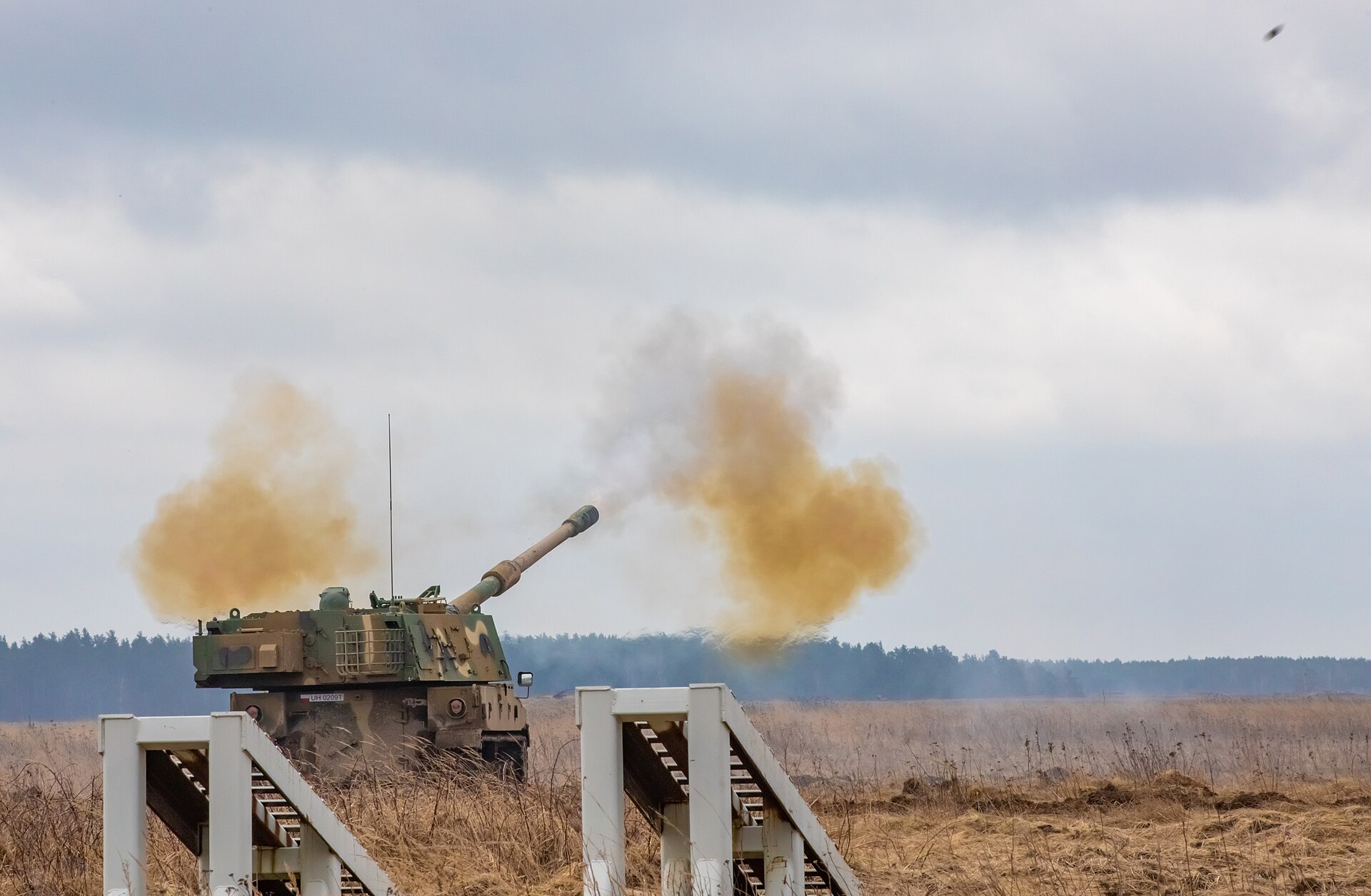
What pulled me back to this name was Poland. In July 2026, the first batch of K9PL howitzers bound for Poland shipped out — not a one-off sale but the start of a long contract that bundles local production and sustainment. As Europe rearms, US and Western European primes with no spare capacity cannot fill the demand, and Korea is absorbing what they leave on the table. Hanwha Aerospace sits at the center of that gap.
My first reason: a backlog near ₩40T
Hana Securities put the backlog at roughly ₩38T ($27B) in its June 4 note, while Korean press reported ₩39.7T as of the end of April. The exact figure moves with the counting date, but either way it is the largest in the company’s history. In defense, a backlog is effectively several years of revenue booked in advance. The sell-side consensus is that this book underwrites revenue and profit growth through 2027–2028. I do not doubt the backlog itself. Poland was followed by orders of about ₩1.3T from Norway and ₩0.9T from Finland confirmed during the first quarter, with Egypt, Australia, and potential entries into Spain and the US widening the pipeline. Europe’s rearmament has moved from slogan to budget line.
What I keep asking is why Korea specifically, and the answer is structural rather than patriotic. European buyers need equipment now, not in a decade, and Korean primes deliver on timelines Western competitors cannot match while a war-footing demand surge strains everyone’s capacity. The K9 is already a proven, widely fielded platform, so a buyer takes on less integration risk than with a clean-sheet design, and the local-production model — build here, then stand up a plant there — lets Hanwha plant both supply and jobs in the customer country. That combination of speed, price, and an installed base is the moat I actually respect here, and it is the reason the backlog kept compounding while the share price fell.
My second reason: 30% export margins
Domestic defense work is cost-plus, so margins are thin. Export volumes carry very different pricing power. On the first-quarter call, export margins were described at around 30%, and the Egypt and Australia work is expected to hold that high-margin structure. In other words, this company’s profit comes less from revenue simply growing and more from the mix shifting from domestic to export. The further into the second half we go, the larger the high-margin Poland revenue becomes — that mix shift is the core of the earnings momentum.
My third reason: how the sell-side draws the second half
On June 4, Hana Securities published a buy call, framed around earnings momentum that it expects to strengthen again in the second half, valuing the shares at ₩1.86M. The note modeled second-half operating-profit growth of 62.7%, against 16.5% in the first half. Yuanta pegged fair value at ₩1.82M on April 9, Korea Investment & Securities at ₩2.0M, and Meritz lifted its figure 13% to ₩1.75M in May. The mean sits in the ₩1.76M range. I do not adopt any of these as my own view. But the fact that four named brokerages all draw a level well above the current price tells me how the market reads the second half.
The leg the market counts less: aircraft engines
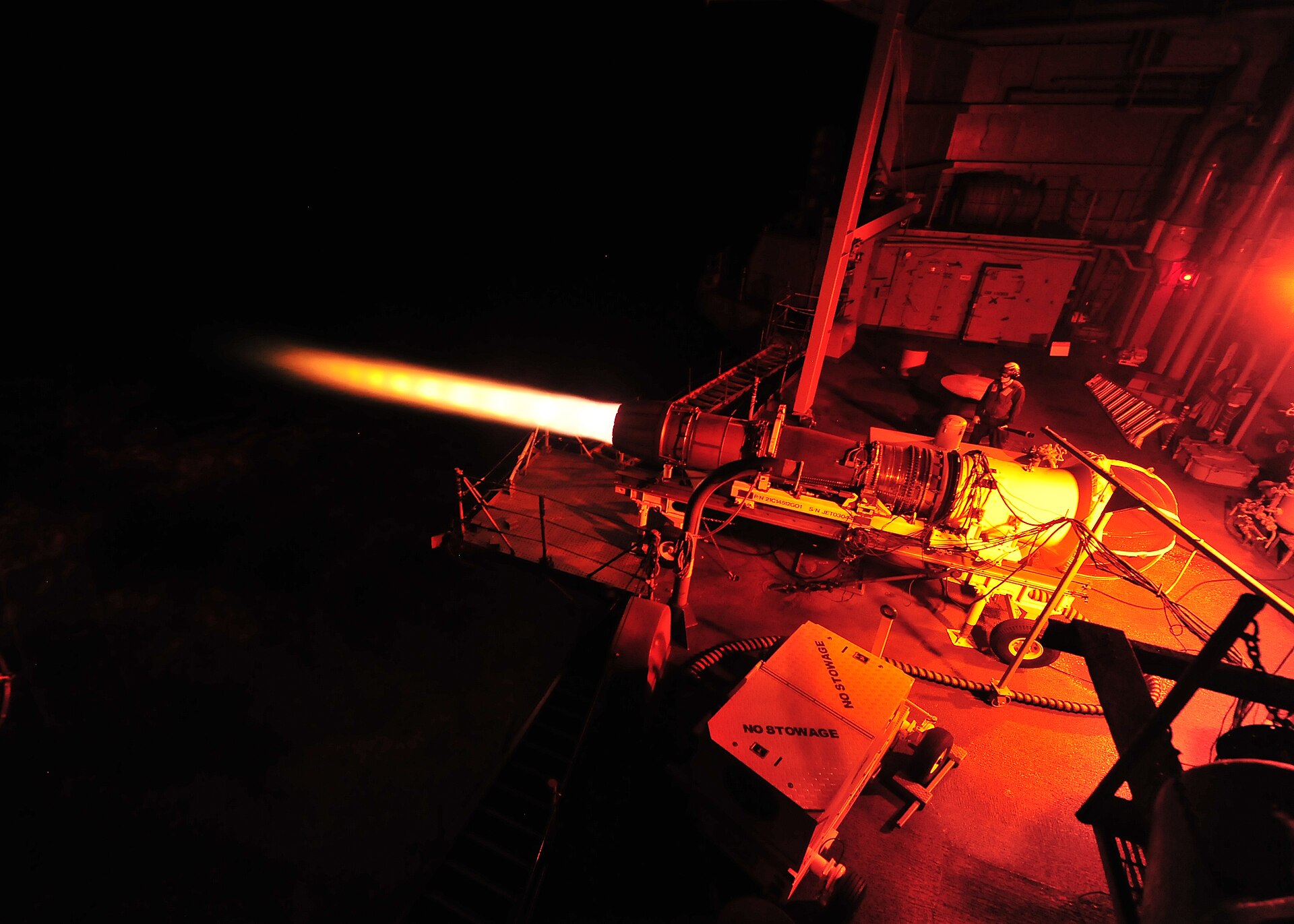
Here is one place I read the company a little differently from the crowd. Almost everything moving the stock right now is ground defense — the K9, Chunmoo, Poland. Search volume and headlines cluster there. But this company has a second engine the market weighs less: literally engines, the aircraft gas-turbine business. Ground-defense exports drive the numbers today, yet engine localization plus maintenance-and-parts revenue runs on a different cycle than weapons exports. When ground defense wobbles on a Poland delivery schedule, that leg keeps its own rhythm. I do not treat this as a reason to buy today. I treat it as the reason not to see this company as a single-cycle order stock, and as a cushion so the whole business does not break in one direction if ground defense stumbles for a quarter.
The engine leg also carries an option the market rarely prices. Korea’s long-run ambition is an indigenous fighter engine, and Hanwha Aerospace is the national champion positioned to build it — a program measured in the 2030s, not the next quarter. Aircraft-engine work compounds slowly through decades of maintenance, repair, and spare-parts revenue once a platform is fielded, which is exactly the kind of annuity that a lumpy weapons-export book lacks. I do not put a number on that option, because putting a fabricated number on a decade-out program is precisely the trap I avoid. I just note that it exists, and that a market fixated on Poland deliveries is under-counting it.
Hanwha Aerospace stock by the numbers — earnings and valuation
That was the bull case. Now the spot where I stopped, in numbers. The table pulls earnings and valuation into one place.
| Metric | Value | Basis / source |
|---|---|---|
| 2025 revenue | ~$19.5B (₩26.7T) | full year, financial data |
| 2025 operating profit / margin | ~$2.2B (₩3.09T) / 11.6% | full year, financial data |
| Q1 2026 revenue | ₩5.75T (+4.9% YoY) | company results, press |
| Q1 2026 operating profit | ₩638.9B (+20.6% YoY) | ~19% below consensus |
| P/E (trailing) / 2026E | ~34x / 24.7x | last close / Hana Jun 4 est. |
| P/B / ROE | ~5.1x / 19.1% | financial data |
| Foreign ownership | over 45% | financial data |
Sources: company results and Korean press, Hana Securities note (2026-06-04), financial data | As of July 2026. USD figures approximate at ~₩1,380/$.
When I reread the table, I stop on two lines. One is the trailing P/E of about 34x and P/B of 5.1x. Even allowing for a 19% ROE, that is not a cheap seat. The Europe-rearmament narrative is already largely in the price. Hana’s 2026 estimated P/E of 24.7x and 2027 of 20.8x only clear if profit climbs the way the sell-side models it — and that estimate is itself conditional. The other line is the first quarter. Q1 2026 revenue of ₩5.75T grew just 4.9% year on year, and operating profit of ₩638.9B landed about 19% below consensus. Poland deliveries were launcher components for Chunmoo rather than finished units, so the mix tilted back toward domestic development and maintenance. The sell-side calls it a temporary air pocket and models a second-half rebound. I do not treat an estimate as a fact until earnings confirm it.
I look at the flow of funds too. Foreign ownership tops 45%. Global investors have already bought the Europe-rearmament story and crowded in. The dividend rose three years running, from ₩1,000 per share in 2022 to ₩7,000 in 2025, but the stock has run so far that the yield is only about 0.7%. I read those two numbers as one signal: the market already treats this as a growth stock, not an income one. If foreign ownership were lighter and the yield higher, dividends would cushion the valuation; that cushion is thin here. So for me this is not a name that dividends hold up — it has to prove itself purely on the speed of earnings.
Why a ₩40T backlog is not cash yet
This is the part I most want to make. The market reads the ₩40T backlog as “locked-in future earnings.” I read it as “a promise that is not yet cash.” The gap between the two is the spine of my watch stance.
A backlog is a promise; cash flow is the realization. In defense, the lag between the two is unusually long.
A defense export means winning the contract, buying and stockpiling parts, building and warehousing units, delivering, and only then collecting payment. Through that lag the company has to burn working capital first. That is why, even while posting ₩3.09T of operating profit last year, the company’s operating cash flow was negative in the financial data I reviewed — the profit was realized on the books, but the cash sat tied up in inventory and receivables. I read this as the nature of a fast-growing defense exporter, not as distress. But understanding it and buying it today are different things.
The company filled that cash gap with equity. In March 2025, Hanwha Aerospace announced a ₩3.6T rights issue; the stock fell 13% in a single day, and after regulatory pushback the company cut the size to ₩2.3T in April. The shares were also flagged as an “investment-warning” stock that year before the designation was lifted at year-end. I read the episode as the price of growth: a defense maker scaling this fast has to pull capital from somewhere, and the bill came back as dilution for existing holders. So when I look at this company, I put “how fast does the order convert to cash” ahead of “how much did it order.”
Honestly, when the rights issue broke I set this name aside for a while. A company that posts profits yet asks shareholders for money did not sit well with me at the time. I now think that read was too simple. The issue was not raising the money but where it went — much of it flowed into inventory and capacity to pre-build export units. That was not consumption; it was pre-investment to turn not-yet-cash orders into cash. Only after I understood that structure did I put the name back on my watch list. Even so, part of me stays wary of the next capital raise.
How the working capital turns shows up in the inventory and receivables lines of the half-year and annual statements. As deliveries ramp, stockpiled inventory drains into revenue and receivables convert to cash, and operating cash flow swings positive. For me that swing is the accounting confirmation that “the orders became real profit.” Buying on the backlog number alone, without that confirmation, is like booking undelivered orders as revenue.
A global peer frames the risk. The original beneficiary of Europe’s rearmament is Germany’s Rheinmetall. Yet in late May 2026, CNBC reported that European defense names like Rheinmetall, Saab, and Renk had entered a cooling-off and consolidation phase after years of surging. The rearmament story is not over — this is the natural pullback after the story was already priced in thickly. I read the 42% drawdown in Hanwha Aerospace stock through the same lens. The story did not break; the valuation that ran ahead of it is now waiting for earnings to catch up.
There is a second peer angle a US reader can feel more directly. American primes like Lockheed Martin and General Dynamics are the incumbents, but they grow at a mature single-digit pace tied to a slow-moving US budget. The growth pocket of this cycle sits with the exporters filling Europe’s gap — Rheinmetall and, from Asia, Hanwha — where revenue can compound at double digits as new-country orders land. That is why a Korean name trades at a defense-premium multiple in the first place: the market is paying for growth, not for a US-style backlog annuity. My caution is not that the premium is unjustified; it is that the premium leaves no room for the delivery timing to disappoint, and Q1 already showed the timing can wobble.
Hanwha Aerospace stock: the two paths I see
The path I weight more: second-half deliveries call the cash (55%)
The sell-side’s second-half Poland guidance is more than 30 K9 howitzers and more than 40 Chunmoo units. If that volume actually delivers and payment starts circulating, the previously negative operating cash flow turns and the first-quarter air pocket fills back in. This is the path I weight a bit more, because Europe’s rearmament is the constant behind it and the backlog is already secured. If it plays out, the trailing 34x compresses naturally as profit grows, and the same mix shift that hurt the first quarter — components giving way to finished units — reverses into a margin tailwind. In that world the second half does the heavy lifting the sell-side already penciled in, and the negative cash flow that worries me today becomes the clearest evidence that the thesis is working rather than the reason to stay out.
The path where I’m wrong: delays and another raise (30%)
The other side is not a stretch. Defense exports get tied to a buyer’s budget cycle, certification, and local politics, and deliveries slip a quarter at a time often enough. If second-half deliveries push into next year again, the cash-collection point slips with them and the working-capital drag lengthens. If a capital-raising card appears the way it did in 2025, existing holders swallow dilution one more time. In this path the 34x valuation struggles to hold. Half of why I keep my hands off today lives here.
Everything else (15%)
The best case is Egypt, Australia, and Spain volumes converting to contracts faster than expected, pushing the backlog past ₩40T and pulling the re-rating forward. The worst case is Europe’s budget priorities shifting, or the geopolitical backdrop calming, and new-order momentum visibly cooling. I weight this low, because rearmament is a multi-year policy cycle rather than a single event.
Hanwha Aerospace stock: where my thesis breaks
What ends my watch is not price but earnings and cash. In order: the first answer comes with Q2 results in August, where I check whether Poland delivery volume lands on guidance and the mix tilts back toward exports. If it confirms, my watch intensity rises a notch. Next is the cash-flow statement — the moment operating cash flow leaves negative territory and turns on a half-year or annual basis is my clearest signal that “the orders have started converting to cash.” When those two point the same way, I begin scaling in. If instead second-half deliveries slip again and capital-raising talk returns, I have to rebuild the very premise that this backlog converts smoothly into profit. That is my breakpoint. On price, since the stock is already 42% below its high, whether earnings confirm matters more to me than how much further it could correct. So I framed my rule as “what I need to see,” not “what I’ll pay.”
How I’m watching it
To sum up, I respect Hanwha Aerospace stock as a flagship standing in the middle of Europe’s rearmament cycle, and I still do not own it. The near-₩40T backlog and 30% export margins are real. What stops me is that the profit is not yet cash, the trailing 34x valuation, and the memory of the 2025 dilution. My next checkpoints are clear: Q2 results in August, the second-half Poland deliveries, and the direction of cash flow that follows. When that turns, I step in. What you do with this is up to you — I write my own rule down first and wait for the numbers to cross it.
For the sister defense name in the same Hanwha group, I keep a separate journal: Hanwha Ocean Stock — What Remains After Canada.
Further reading: the sell-side view is summarized in this MarketScreener consensus page; the European defense pullback is covered by CNBC; live quotes and financials are on Yahoo Finance and Simply Wall St; and the company’s own numbers are at Hanwha Aerospace IR.
Related reading
- LIG Nex1 Stock Rose Half as Much as the KOSPI Rebound
- Hyundai Rotem Stock: Record Backlog, Halved Share Price
- Hanwha Corp Stock And The Equity That Is Not Its Own